
What Goes Into Making a Branding Video Production?
Pre-production, shoot day, and the edit — what each stage decides.
A great branding video can make a company feel more human, memorable, and trustworthy. It can communicate what a business does, what it stands for, and why customers should care—all in a matter of minutes.
But the polished video viewers see on a website or social media is only the final result of a much larger creative process. Behind every successful branding video is a combination of strategy, storytelling, creative direction, production, and careful post-production.
So, what actually goes into making a branding video production?
1. Starting With the Brand Strategy
Before cameras are turned on, the production team needs to understand the brand.
A branding video should do more than simply showcase products or services. It should communicate the personality, values, positioning, and overall identity of the company.
The first stage often involves conversations about questions such as:
- Who is the target audience?
- What does the company offer?
- What makes the brand different?
- What problem does it solve?
- What should viewers feel after watching the video?
- What action should viewers take?
These answers provide the foundation for the entire production. Without a clear strategy, even a beautifully filmed video can fail to communicate the right message.
2. Developing the Concept and Story
Once the goals are clear, the creative team develops the central concept.
This is where branding video production becomes storytelling. Rather than simply listing facts about a company, the goal is to create a narrative that connects with the audience.
Depending on the brand, the story might focus on its founders, employees, customers, craftsmanship, technology, mission, or the problem it is trying to solve.
A strong concept gives the video a clear personality. It determines the visual style, tone, pacing, locations, interviews, music, and overall structure.
3. Writing the Script
The script turns the concept into a structured story.
For some branding videos, the script may feature a professional voiceover. For others, the story might be told entirely through interviews, natural dialogue, visuals, and music.
Good branding scripts are usually concise. Every sentence needs to earn its place because viewers have limited attention spans.
The script also needs to sound authentic to the brand. A technology company, nonprofit organization, luxury brand, and family-owned business may all require very different voices.
4. Planning the Production
With the story established, the production team begins planning how to bring it to life.
This stage can include:
- Creating a storyboard or shot list
- Selecting filming locations
- Scheduling interviews and talent
- Hiring actors or presenters when needed
- Organizing equipment
- Planning lighting and sound
- Coordinating crew members
- Arranging props, wardrobe, and set design
- Establishing a production schedule
Good planning is one of the most important parts of the process. The more prepared the team is before production begins, the more efficiently the filming days can run.
5. Choosing the Right Visual Style
Visuals play a major role in communicating a brand.
Cinematography, lighting, color, camera movement, composition, and production design can all influence how an audience perceives a company.
A clean, modern visual style may work for a technology brand, while warm natural lighting and handheld camera movement might better suit a company that wants to emphasize people and authenticity.
The goal isn't simply to make the video look impressive. The visual language should support the brand's identity and reinforce the story.
6. Production and Filming
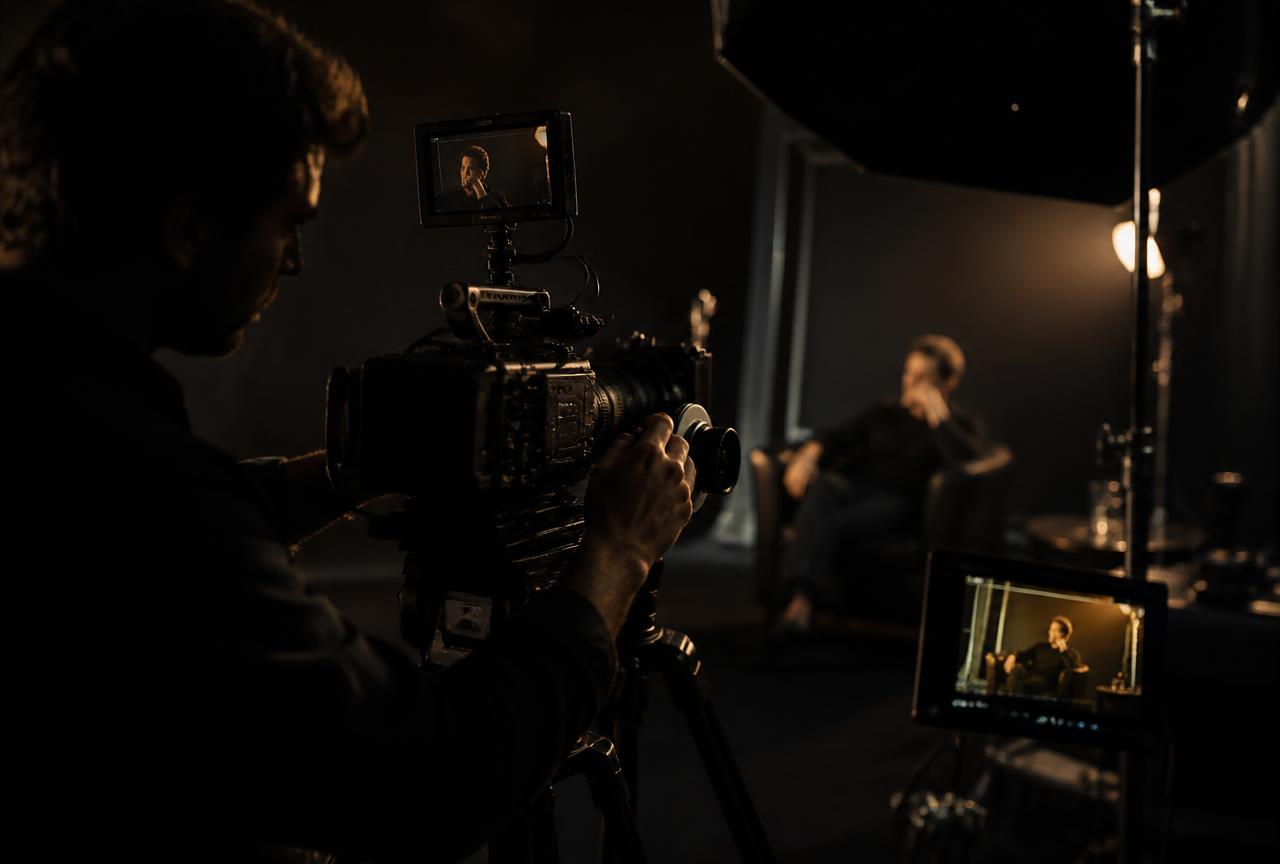
This is the stage most people associate with video production: cameras, lights, microphones, and a production crew.
Depending on the project, filming can take place in an office, studio, factory, retail environment, outdoor location, or multiple locations.
Interviews often form the backbone of corporate branding videos. The production team works to make interview subjects comfortable and encourages them to speak naturally rather than simply reciting prepared lines.
Alongside interviews, the crew captures B-roll—supporting footage that illustrates what people are saying. This might include employees working, products being made, customers interacting with a service, meetings, facilities, or small details that bring the brand's world to life.
The combination of strong interviews and compelling B-roll helps transform information into a visual story.
7. Professional Sound
One of the easiest things for viewers to overlook is also one of the most important: sound.
Poor audio can make even beautiful footage feel amateur. Professional branding video productions typically use dedicated microphones and careful recording techniques to capture clean dialogue.
Sound design also extends beyond dialogue. Ambient sounds, music, transitions, and other audio elements can dramatically affect the mood and emotional impact of a video.
8. Editing the Story Together
Once filming is complete, the project enters post-production.
Editors review hours of footage and select the strongest material. They then assemble it into a coherent story that reflects the original creative concept.
Editing involves much more than putting clips in chronological order. Editors control pacing, transitions, emphasis, timing, and emotional rhythm.
A good editor knows when to let a moment breathe and when to move quickly. They also know what to remove. Often, the strongest final video comes from making difficult choices about what doesn't need to be included.
9. Color, Graphics, and Motion Design
After the edit begins to take shape, additional visual elements can be added.
Color grading creates a consistent look across the footage and can help establish a particular mood. Graphics and animation can explain complex information, reinforce branding, introduce statistics, or make key messages easier to understand.
Logos, typography, lower thirds, titles, product animations, and other motion graphics should feel like natural extensions of the brand rather than distracting additions.
10. Music and Final Sound Design
Music can be one of the most powerful emotional tools in a branding video.
The right track can make a video feel energetic, inspirational, sophisticated, intimate, or adventurous. The wrong music can have the opposite effect.
Editors and sound designers balance music with dialogue, ambient sound, and effects so that every element works together.
11. Reviews and Revisions
Branding videos often go through several rounds of review.
Marketing teams, executives, creative directors, and other stakeholders may provide feedback on the messaging, pacing, visuals, or branding.
The production team then makes revisions while maintaining the integrity of the original concept.
This collaborative stage helps ensure that the final video meets both creative and business objectives.
12. Delivering the Final Video
The final step is preparing the video for its intended platforms.
A branding video might be used on a company website, social media, presentations, trade shows, advertising campaigns, recruitment pages, or internal communications.
Each platform can have different technical requirements and audience expectations, so the final production may be exported in multiple formats, lengths, or aspect ratios.
The Goal: More Than Just a Beautiful Video
At its best, a branding video isn't simply a collection of attractive shots. It is a strategic piece of communication.
The strongest productions combine brand strategy, authentic storytelling, thoughtful cinematography, professional sound, skilled editing, and purposeful design to create something that audiences remember.
When all of these elements work together, a branding video can do something that traditional marketing often struggles to accomplish: it can give a company a face, a voice, and a story.
And that is ultimately what makes branding video production so valuable. It isn't just about producing video. It's about turning a brand into a story people can see, hear, understand, and connect with.
Want help putting this into action?
Let's talk about your business and how Legacy 24 can help you grow.
Start a Conversation